“For it is impossible that the blood of bulls and goats take away sins.”
-Hebrews 10:4
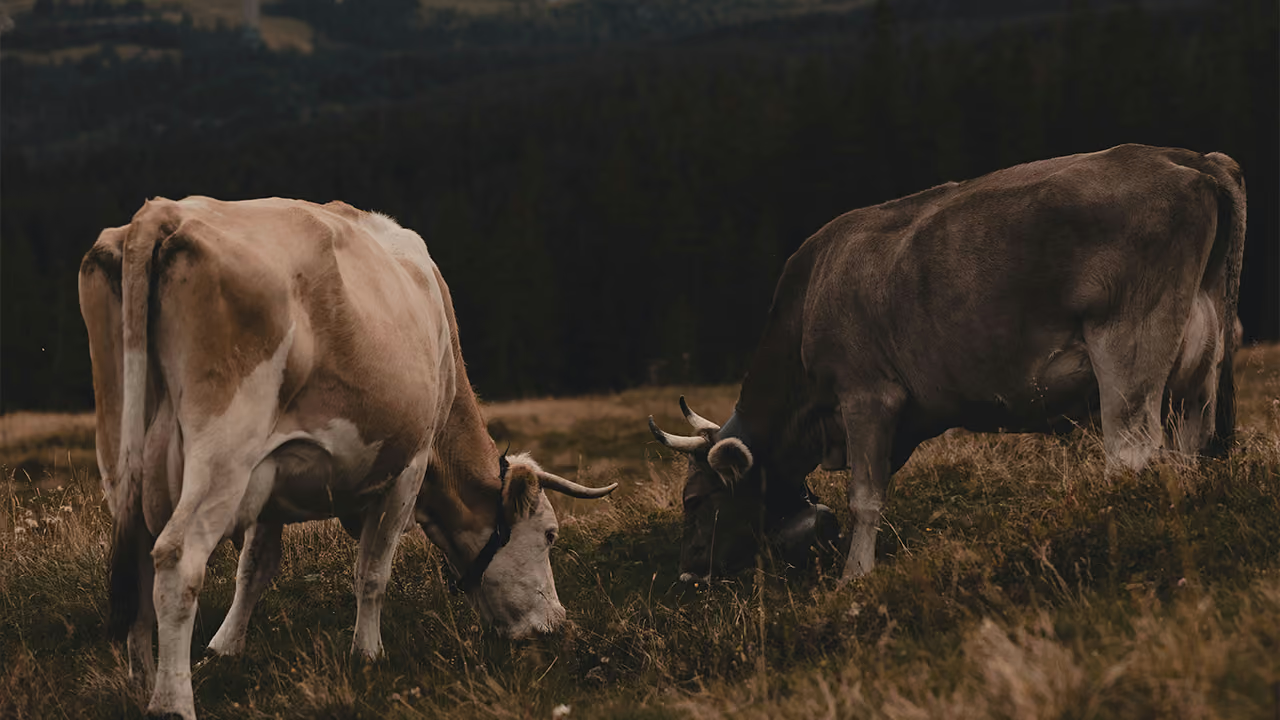
Oxen and cattle appear numerous times in the Old and New Testament. They were a crucial part of life in ancient times, especially in a largely agricultural society. These gentle giants continue to play an important part in modern rural life, providing dairy and meat with, according to Clover Meadows Beef, over 800 different breeds across the world. They also chew cud–re-digested food– for up to eight hours a day and have almost 360-degree vision! Not only were they useful for producing milk and pulling plows, they played a major role in the religious life of the Jewish people.
Cattle were associated with worship and sacrifice, whether for better or worse. When God established a covenant with Abraham, one of the slaughtered animals was a heifer, a female cow. After being delivered from Egypt, the Israelites made a golden calf at the supervision of Aaron–whom Moses appointed as High Priest–and worshipped it…an event which ended in tragedy. Although individuals could offer these animals as sin or burnt offerings, it was the role of the priests to make these sacrifices for themselves and for the people.
Particularly, on the Day of Atonement, the High Priest would sacrifice a bull for himself and for his household (Leviticus 16:6) for the forgiveness of sin. This is essentially the feast at the beginning of the Gospel according to Luke: the High Priest Zechariah enters the Holy of Holies in the Temple and receives the message of the Angel Gabriel that after years of infertility, he and his wife Elizabeth would have a son: John the Baptist, the one who would prepare the way for the Lord.
St. Luke and his Gospel–which contains the most detailed account of the events leading up to, and the actual birth of Jesus–are often depicted in religious art with an ox because of this opening story, highlighting the sacrificial, and priestly aspect of our Lord. In addition, the ox also symbolized service and mission, as they were often yoked together to pull plows.
Overall, the ox points to our Lord whose service was to lay His life down as a sacrifice. He is the true High Priest who “entered once for all into the sanctuary, not with the blood of goats and calves but with his own blood, thus obtaining eternal redemption” (Hebrews 9:12).
We praise God that we have a High Priest who sympathizes with our weaknesses (Hebrews 4:15), who quite literally was born amongst the dirt of animals: among sheep, goats, oxen…to serve and to offer Himself as the perfect sacrifice to save us from our sin.