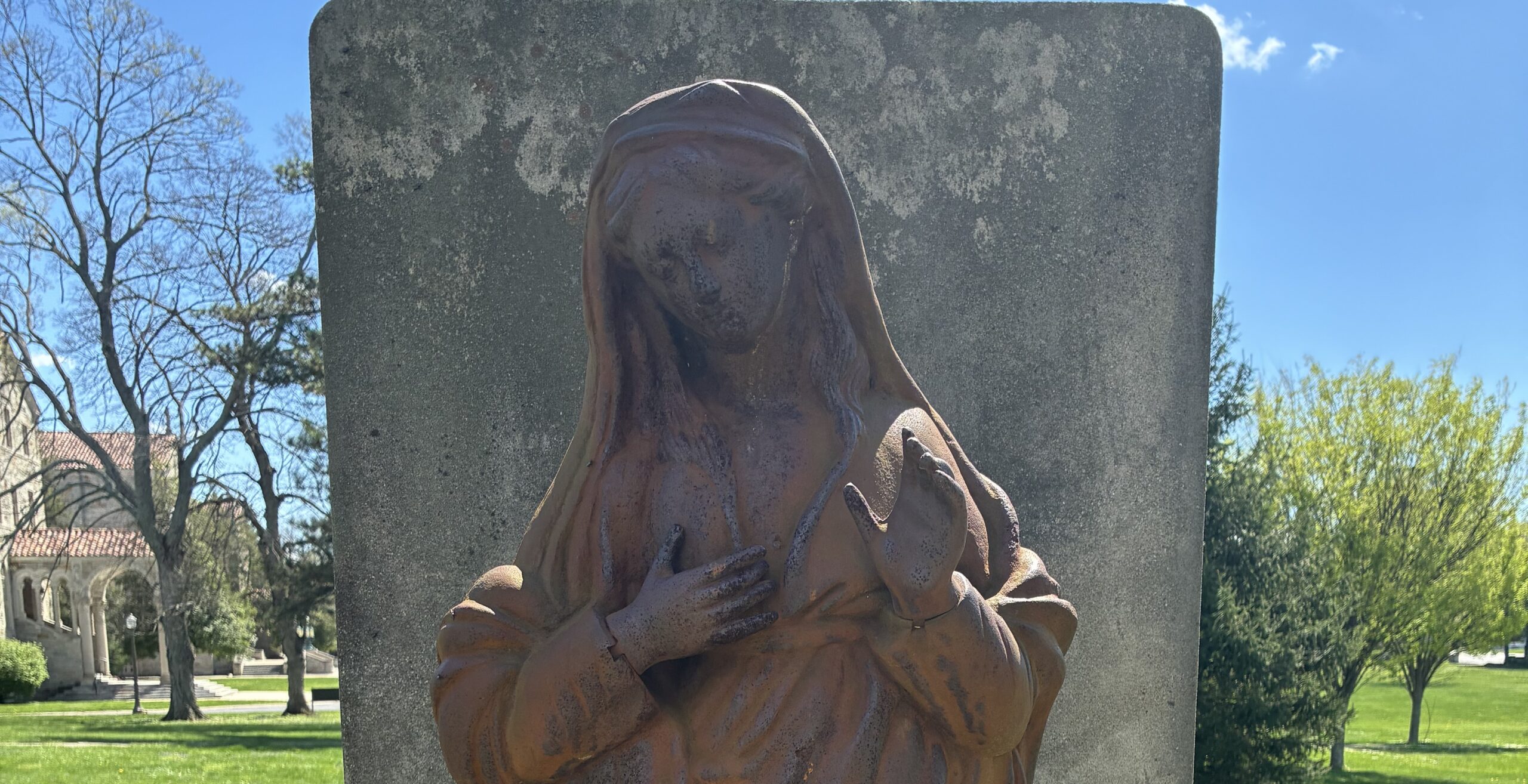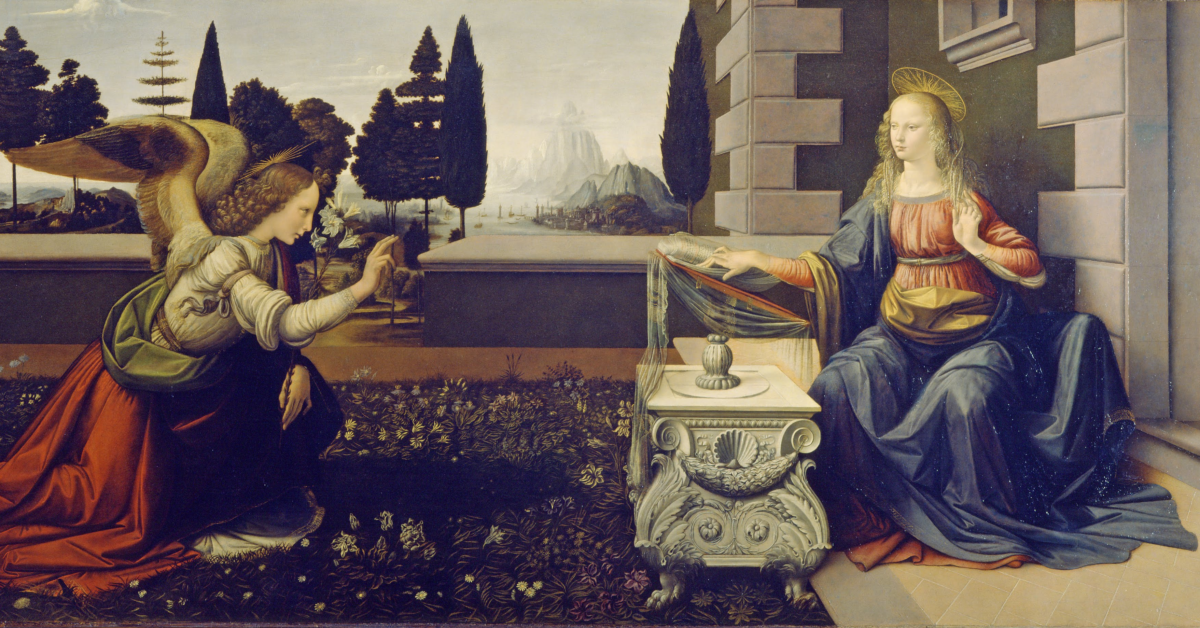
Every year, on the third Saturday after Pentecost, the Church celebrates the Feast of the Immaculate Heart of Mary. As the liturgical calendar moves out of the Easter season and into Ordinary Time, we are invited to ask the Blessed Mother for her intercession and join her in pondering the mysteries of the Incarnation. The feast comes at a particularly meaningful time for rural communities. As the planting season ends, Mary shows us the way to entrusting everything to the Lord.
Devotion to the Immaculate Heart of Mary goes back to the Middle Ages, with the earliest known use of the title dating to the 7th century Spanish saint and bishop, Ildophensus of Toledo. Throughout the Middle Ages and the Renaissance, many saints and ordinary Catholics found solace meditating on Mary’s heart, and the way in which she gave her whole self–mind, body and soul–to cooperating with God’s plan of salvation. As St. Augustine said, “Mary conceived Christ in her heart before she conceived him in her womb.” In other words, Mary welcomed Christ into her inmost being with complete and perfect faith.
Despite this early devotion, official liturgical celebration of the feasts of the Sacred Heart of Jesus and the Immaculate Heart of Mary did not come about until the 1800s. Various popes authorized special liturgies for these feasts in response to an increase in popular devotion among the faithful, first allowing local celebrations and then later promulgating them to the entire Catholic Church. The current dates for the two feasts, on the third Friday and Saturday after Pentecost respectively, were established by Pope St. Paul VI in 1969.
Prayer to the Immaculate Heart of Mary
O Immaculate Heart of Mary, refuge of sinners, I beg of you by the infinite merits of the Sacred Heart of Jesus, and by the graces God has granted to you since your Immaculate Conception, the grace of never going astray again. Mother, keep me, a sinner, constantly bathed in the light of your Immaculate Heart. Amen.
It is easy to take the liturgical year for granted. But as this history shows, feast days often come about after a long period of gestation and development. In the case of the Immaculate Heart of Mary, the history of the devotion actually mirrors what it celebrates. Just as the Church developed the feast over time, so too it is this very capacity for ever-deeper reflection and understanding that we honor in the Immaculate Heart of Mary.
The roots of devotion to Mary’s heart are found in the Bible. It should be noted that in both the Old and New Testaments “the heart” does not refer primarily to the physical functions of blood circulation. Ancient Jewish and Greek culture viewed the heart as the inmost self, the place of thought, meditation, imagination, and emotion.
In the Gospel according to Luke, while describing the birth and early life of Jesus, the Evangelist twice pauses his narrative to comment on Mary’s heart.The first instance occurs in the Christmas story. Luke tells how after Jesus was born in Bethlehem, “a multitude of the heavenly host” appeared to some shepherds by night and told them of Jesus’ birth. The shepherds responded to God’s call and rushed to Bethlehem to find the newborn Savior.
These simple, anonymous shepherds were thus some of the very first evangelists. They did not keep the good news to themselves. Rather, when they came to Bethlehem and found Joseph and Mary, “they made known the saying that had been told to them concerning this child. And all who heard it wondered at what the shepherds told them” (Luke 2:18). But the Blessed Mother does more than simply wonder at this good news. She “treasured up all these things, pondering them in her heart” (Luke 2:19).
Later in the same chapter, Luke provides the only story we have of Jesus from the decades between His infancy and His baptism in the Jordan. When Jesus was twelve years old, He went with His parents to Jerusalem for the Passover. He secretly stayed behind, causing Joseph and Mary great distress as they spent three days looking for Him. Of course, they finally came upon Him discussing the Scriptures with the elders in the Temple. The Gospel then reports:
And when his parents saw him, they were astonished. And his mother said to him, “Son, why have you treated us so? Behold, your father and I have been searching for you in great distress.” And he said to them, “Why were you looking for me? Did you not know that I must be in my Father’s house?” And they did not understand the saying that he spoke to them. And he went down with them and came to Nazareth and was submissive to them. And his mother treasured up all these things in her heart. (Luke 2:48-51)
These two stories from the Gospel show how the Blessed Mother responded to uncertainty and difficulty in life. She experienced great pain and anxiety searching for her lost child for three days and also, perhaps, in His surprising response to her very reasonable questions. And even in the Christmas story, we know that while the angels proclaim glorious news of the newborn King and Savior, it will only be through the pain and horror of the Cross that Jesus establishes His kingdom and brings about our salvation. Mary responded to the crosses in her life neither with fear nor with the proud presumption that she can figure it all out on her own. Rather, she stayed close to God, meditating constantly in her heart, even while she walked in her Son’s footsteps to the summit of Calvary.
The Feast of the Immaculate Heart of Mary provides several practical lessons for Catholics living in rural areas today:
- Pray without Ceasing – Mary’s first response to adversity is prayer. She contemplates how God is working in her life instead of seeking to control the situation or run away from it. With the often 24/7 demands of farm work, it can be challenging to schedule in time for prayer. But with Mary, we can always respond to difficulties with a peaceful spirit.
- Radical Faith – Out of Mary’s rich inner life, comes a complete trust in the will of God. Rural communities are particularly exposed to forces outside individual control–the fluctuations of weather and global markets, the long and often lonely hours of work. Mary shows how faith strengthens us through the hardest of times.
- Suffering with Others – St. Paul tells us to “Rejoice with those who are rejoicing; weep with those who are weeping” (Romans 12:15). Sometimes the best way we can help others who are suffering is to open our hearts to listen to them and share in their suffering, just as Mary opened her heart to the suffering of her Son on the Cross. This vulnerability is an essential element to keeping rural communities together.
Immaculate Heart of Mary, pray for us!