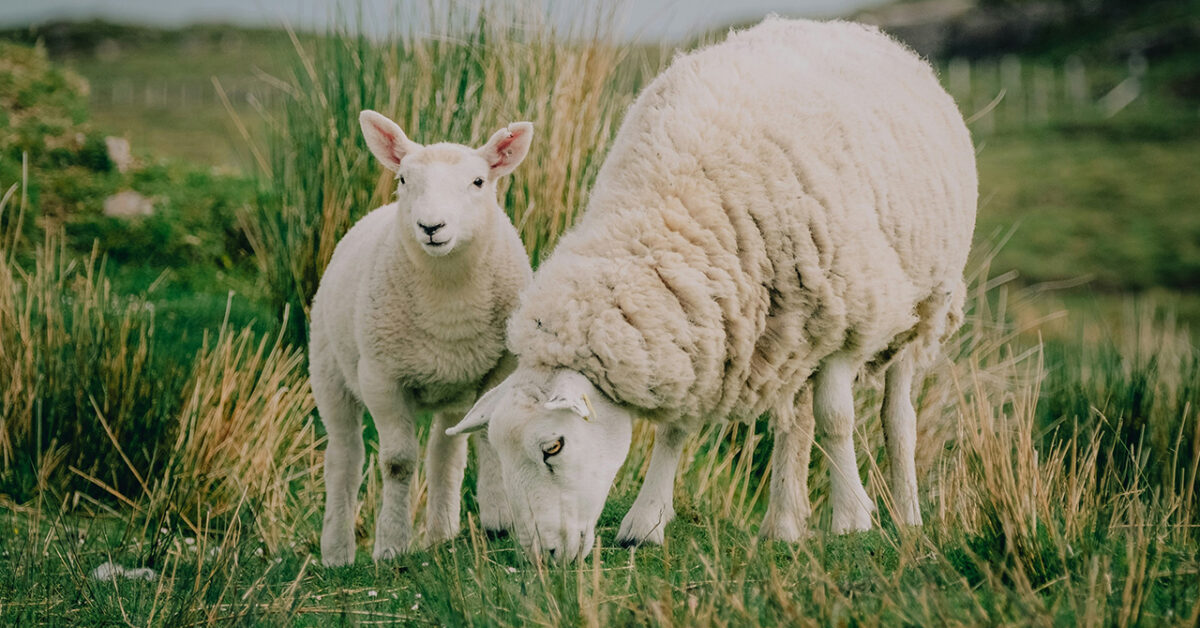
Perhaps the most significant animal to be present at the manger is the sheep. There was certainly an abundance of these humble creatures in Biblical times, as they were crucial to everyday life: providing wool, dairy, meat, and most importantly, sacrifice to God. Even today, sheep continue to play a vital role in agricultural life.
These gentle animals have very interesting characteristics. According to Open Sanctuary Project, sheep are able to recognize individuals and even facial expressions; their vision is almost 360 degrees; and there is some evidence that they are able to imagine particular faces. They can also distinguish the voice of their shepherd or master, apart from any other, and therefore respond to it. They are incredibly relational creatures!
From the beginning of time, sheep have been used as sacrifices. People recognized their value in daily life, and what better way to worship God than to offer Him one’s livelihood?
One thing that distinguishes the sheep from the ox–the other animal of sacrifice–is for its vulnerability and innocence, especially when they were sacrificed before reaching adulthood. Oxen were known for their physical strength. In particular, God commands Moses and the Israelites to sacrifice unblemished male lambs and paint their blood on the doorposts to protect them from the final plague on Egypt: the Angel of Death come to slay the firstborn.
The blood of the Paschal lamb would save those who were under its mark.
And even though sheep were considered important in the life of the Jewish people, the shepherds who raised them were considered outcasts. With the shepherds being the first to receive the joyful news of the birth of the Messiah, and invited to meet Him, the Lord speaks clearly that He sees, knows, and loves the poor and marginalized.
Sheep are not explicitly mentioned in the account of the Nativity, but it is highly likely that they were present–both in the stable where our Lord was born, and with the shepherds who visited Him. He is the true “Lamb of God who takes away the sin of the world” (John 1:29), unblemished by sin to be the perfect sacrifice and atonement for ours. He became vulnerable, like a little lamb, so that we would not be afraid to approach Him.
The Lord also calls us to be like sheep in His parables: dependent upon Him as the shepherd, and discerning of His voice. Contrary to general opinion, sheep are not naive or gullible. They are able to place their trust in the one who cares for them. May we do so completely in the Lord, trusting that He knows what is best for us and relying entirely on Him for everything.