For millenia, grapes have been used as food and wine for drink. Wine is essentially made from the juice of grapes, stored for an extended period of time, to the point of fermentation. In ancient societies, the fruit would generally be crushed underfoot by people to extract its juice. Today, machines can aid and hasten the process of juicing. Yeast is added to begin the process of fermentation in a tank, and this can take several days to a few weeks depending on the kind of wine being made; then it is stored for an extended period of time to be clarified and develop its full flavor (Napa Valley Wine Academy ).
In the Scriptures, wine is associated with joy, celebration, and the divine. In some instances, they also represent the judgment of God, especially when the crushing of grapes is mentioned.
Isaiah 63 is one example:
“The wine press I have trodden alone, and from the peoples no one was with me.
I trod them in my anger,
and trampled them down in my wrath;
Their blood spurted on my garments,
all my apparel I stained.”
–Isaiah 63:3-5
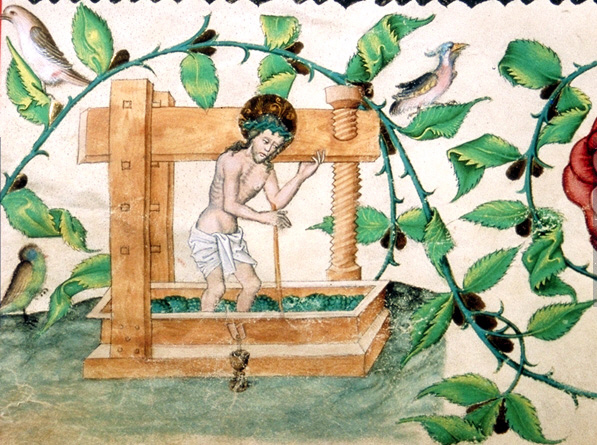
Medieval iconography portrays Jesus, lightly dressed as He was in His Passion, treading grapes in a winepress, with the horizontal beam of the cross on His shoulders. He is both the grapes being crushed, and the One willing it to happen. He is actively fulfilling Justice for our sins and thereby destroying sin and death. He is also allowing Himself to be pressed to give us divine life through the wine of His Blood, shed for the remission of our sins.
In the symbol of Christ and the winepress, we see both God’s Justice and Mercy at play. His Justice is perfect and rights every wrong. Nothing escapes His sight, and He deals with sin to the fullest extent. He is also truly merciful, taking on the consequences of our sin on our behalf. And in this process, the wine of His Blood gives us eternal life and reunites us to the Father.