As the priest prepares the altar at each mass, he prays “Blessed are you, Lord God of all creation, for through your goodness we have received the bread we offer you: fruit of the earth and work of human hands, it will become for us the bread of life.”
Catholics know it by heart. Seldom, though, do we think about that hidden “work of human hands” that goes into making the hosts that become the body of our Lord on the altar.
“Just knowing you’re making the matter for our Lord’s presence on Earth is beautiful,” says Sister Mary John, manager of the altar bread operations at the Cistercian Valley of Our Lady Monastery in rural Iowa County, Wisconsin.
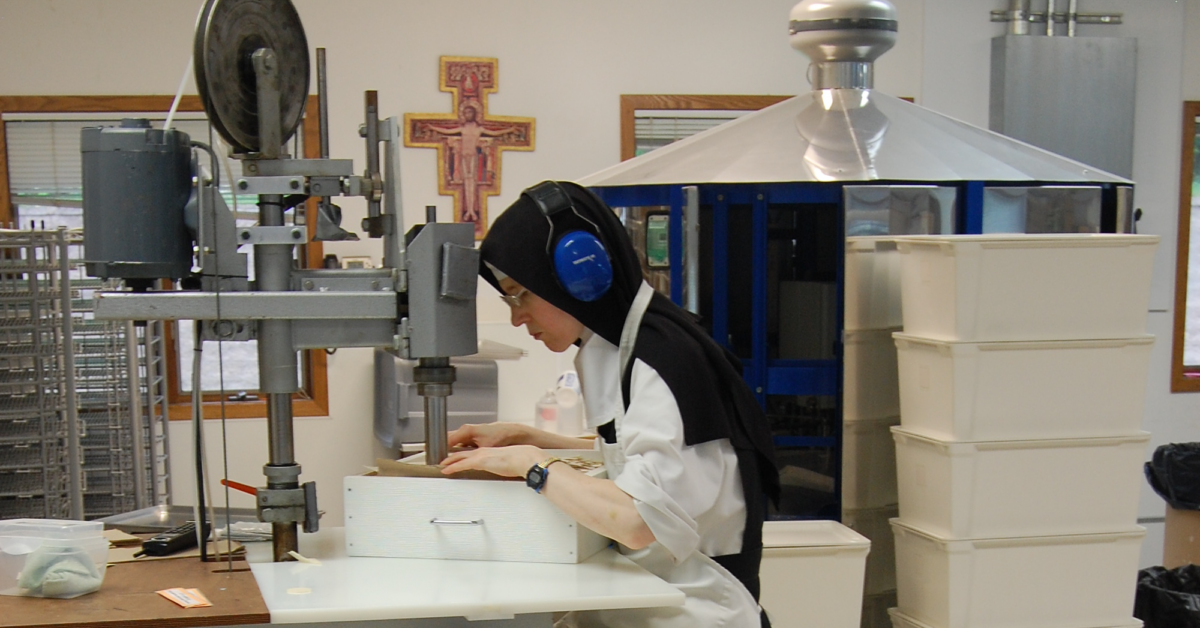
Making altar bread is the common work of all the nuns in the monastery. Sister Mary John explains that even one of the elderly nuns who is in a wheelchair is involved, making the boxes for the hosts.
When the monastery was established by Cistercians from Switzerland in 1957, the nuns operated a dairy farm. The constant attention required to care for the cows, though, proved a challenge to their daily horarium, or prayer schedule, and so they decided to switch to baking altar bread.
As Cistercians, the nuns at Valley of Our Lady live out the Benedictine tradition of ora et labora, work and prayer. Each week, they pray all 150 psalms, beginning with matins at 3:30 in the morning. The work of preparing altar bread is not a break from this routine of daily prayer, but a continuation of it. It is a silent, contemplative, and spiritually fruitful time of encounter with the Lord in each nun’s day.
“We work in silence,” says Sister Mary John. “There is a sense in which you can carry the Word within you and let it sit with you […], paying attention to the heart and things that are going on, things that are coming up that can be meeting places with the Lord – not always an easy one – he’s showing you something new, something you’ve overlooked before.”
Sister Mary Elizabeth of the cloistered convent of Passionist Nuns in Ellisville, Missouri agrees that the work of making altar bread for the Church can be a beautiful time of reflection. The nuns work with “full hearts,” she says, contemplating the Eucharist and Christ’s passion.
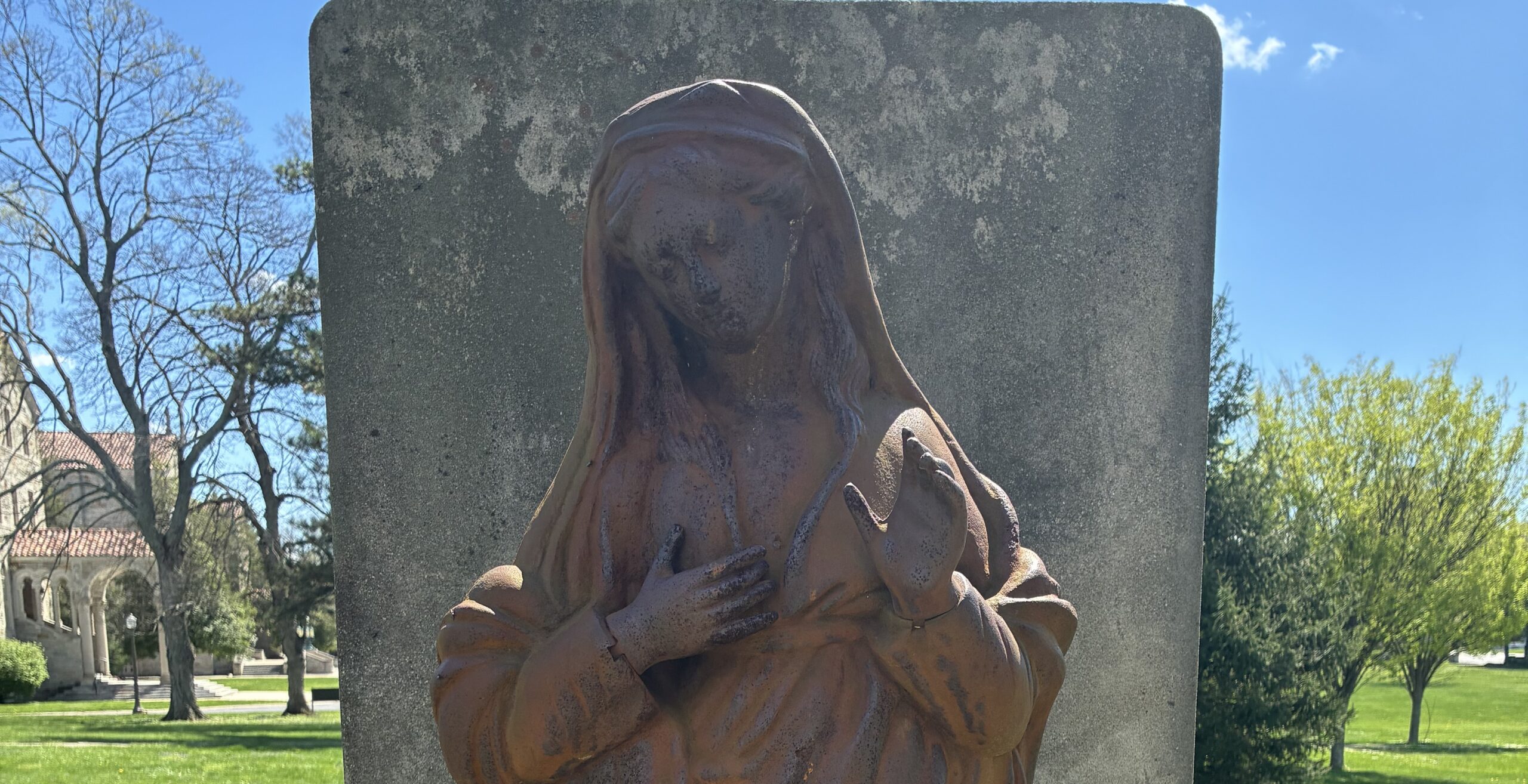
“We unite with the Sorrowful Mother Mary at the foot of the Cross/Altar! What graces! What glory!”
The convent has had a small altar bread operation since 1948 that currently provides hosts for about 20 parishes in the Archdiocese of Saint Louis and about 10 religious orders across the country. Like at Valley of Our Lady, the making of altar bread forms part of a very full day of prayer that begins before sunrise each morning.
The apostolate of working so closely with the bread that truly becomes the body of Christ is a privilege for the convent, says Sister Mary Elizabeth.
“How can we put in writing the unfathomable gift of Our Lord Jesus Christ in this humble host of His where we consume Him and He consumes us?” she says. “What would we be without Him here?”
The Eucharist was pivotal for Sister Mary John in coming to a deeper faith in Christ. She grew up undercatechized, she explains, unaware of the fact that the bread and wine on the altar truly become the physical body and blood of Jesus. Once she learned the fullness of the Church’s teaching in high school, her life changed and a lifelong love for Christ in the Eucharist was born.
“It was almost like just night and day,” she says. “It was just a deepening of understanding of our faith, of being hungry for more, being hungry for His presence.”
That desire later led to a desire for religious life, “to live in the presence of the Lord day and night, to always be under the same roof.”
The Eucharist, she says, is so needed in our culture today. At a time when people spend so much of their time in the virtual world of technology, Christ desires to meet people in a physical, tangible way.
Living out the Cistercian charism of work and performing the labor involved in making altar bread has been full of spiritual lessons for her.
“I have a body, and physical, manual labor is something the Lord wants to raise for me,” she says. “There’s something real and good about being able to give and worship something you […] can hold in your hands.”
She explains that there are spiritual insights to be gained from every step of the process in that physical work of making altar bread.
“Each part has its formative aspects,” she says.
When sifting the wheat, she is reminded of Luke 22:31-32 in which Christ tells Peter, “Simon, Simon, behold Satan has demanded to sift all of you like wheat, but I have prayed that your own faith may not fail; and once you have turned back, you must strengthen your brothers.” It is an opportunity, she says, to pray for all the priests and bishops who will consecrate the hosts at Mass — even the holiest among them are tempted.
The baking of the bread is a reminder, as Saint Augustine writes, of the necessity of passing through fire and water. He wrote about how catechumens must pass through the fire of difficult trials before attaining the waters of baptism, but Sister Mary John understands the metaphor applying to the Christian life more generally. She notes that the martyr Saint Polycarp, when he was burned at the stake, smelled like baking bread. Like Polycarp, we all need to pass through our own fires in life before arriving at our eternal reward.
One of the last steps in the work is called “atomizing,” the process of humidifying the bread to prevent it from cracking. Here she is reminded of the second eucharistic prayer: “Make holy, therefore, these gifts, we pray, by sending down your Spirit upon them like the dewfall.”
“[There’s] a sense of the Holy Spirit filling and preparing for docility,” she says. “How often our Lord is preparing us in ways we do or don’t see, always gently. Even if it doesn’t feel like it.”